

Grace Adofoli
The Unfinished Search: From Comfort to Courage, Discovering Meaning Beyond the Surface
“If you look for truth, you may find comfort in the end; if you look for comfort, you will not get either comfort or truth—only soft soap and wishful thinking to begin, and in the end, despair.”
— C.S. Lewis
The Unfinished Series – Part 5
Some things are instinctual and subconsciously ingrained—hardwired beliefs that shape how we live and think. Philosopher Michael Novak calls these “constitutive” beliefs: not mere opinions, but the deep convictions we adapt our lives around.
When these convictions are challenged, we often resist—even if new perspectives could set us free. Yet to grow in grace, mercy, and wisdom, we must return to the mindset of a child: open, curious, and willing to be changed.
Rarely do we pause to notice how naturally we extend grace to children. We assume their intentions are good. We give them the benefit of the doubt. Yet as children grow into adults, that instinct fades. We begin to expect maturity, norms, and accountability—and when those expectations aren’t met, something in us recoils.
This shift reveals something about our approach to truth itself. To discover truth, we must approach it with a childlike posture—open, curious, assuming good intent. Without that posture, we risk cynicism, defensiveness, and the loss of wonder.
Childlike curiosity is not naive; it’s the gateway to discovery.
“Speaking truth to power” has long been used to describe the courage to confront injustice and challenge authority. Yet the phrase should not only be aimed at public systems; it also belongs in our private lives. We each exert power—through privilege, position, or influence—and how we wield that power matters. To mold a society that is just and merciful, we must pull back the curtain on our private beliefs. Simply knowing something does not equal understanding it, and understanding does not automatically lead to living it. The key is to live in accordance with what we profess.
Fundamental truths undergird society much as gravity and oxygen undergird life. Without justice, we become merciless. Without love, hatred persists. Without capital, many endeavors stall. When truth erodes—whether in science, ethics, or culture—its consequences ripple out, weakening the very systems we rely upon.
Personal expression matters (“speak your truth”), but it should not replace our ability to assess what is objectively valid and reliable. Cracks in the foundation start small—tiny compromises that eventually destabilize the whole structure. Erosion of truth is not only collective neglect but also individual ignorance multiplied across a society.
Pursuing truth cannot be separated from grace, mercy, and justice. These are not abstract concepts but the pillars on which healthy communities stand.
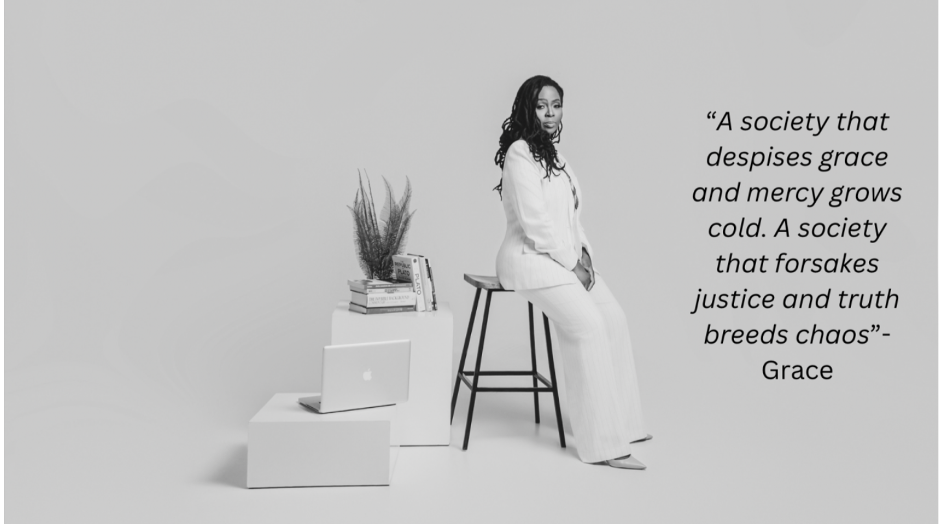
A society that despises grace and mercy grows cold. A society that forsakes justice and truth breeds chaos.
Each of us holds a piece of this weight. Sometimes, holding this responsibility means diverging from popular opinion or confronting institutions when they forsake their role. It means resisting the temptation to live wrapped in a lie for the sake of comfort.
Many of our pursuits—career, relationships, milestones—are really unspoken questions about who we are, where we belong, and what gives us purpose:
- A promotion may ask, Am I capable?
- A relationship may ask, Am I loved?
- A legacy may ask, Will I endure?
The tragedy is mistaking these pursuits for answers—materializing meaning—by believing achievements or possessions can satisfy deeper longings. This approach often leaves us restless once the milestone is reached. Discovering meaning, by contrast, faces the questions directly. It’s less about acquiring and more about becoming—allowing our pursuits to reveal, shape, and transform us rather than define us. In doing so, we move from trying to “arrive” to living authentically and in ongoing discovery.
Our need to be like a child in our search is really our need to be free from fear and pride. Beneath our grown-up defenses lies a child wanting to be seen, understood, and liberated. By nurturing that childlike openness, we stay quick to listen, slow to judge, and eager to keep learning. We become less focused on the external pressure to “arrive” and more willing to engage in the practice of ongoing transformation. We become less enamored with accumulating markers of success and more intent on knowing ourselves, others, God, and the world.
We move from materializing meaning to embodying meaning—living it out authentically, imperfectly, and in community.
This unfinished search is not a weakness but a lifelong practice. It’s the discipline of asking, seeking, and discovering—again and again.
If unfinished searches are a lifelong practice, then the real question is:
What hard questions are you asking of yourself right now? And what core beliefs need to be untangled?
Your answers may not come quickly. They may not come neatly. But in the asking lies your freedom, and in the seeking lies your becoming.
With this, I say: “To act justly, to love mercy, and to walk humbly with your God.” — Micah 6:8
Selah!

The Shifting Waters Leadership Institute develops leaders who lead with wholeness, integrity, accountability, and purpose. Rooted in the belief that every person is made in the image of God—the Imago Dei—SWLI cultivates communities where leaders grow together and inspire lasting change.
Quick Links
Get In Touch
1108 E Main St
#2436 Ste 90,
Richmond, Virgina
United States – 23219
Copyright © 2025 Shifting Waters Leadership Institute. All rights reserved.